
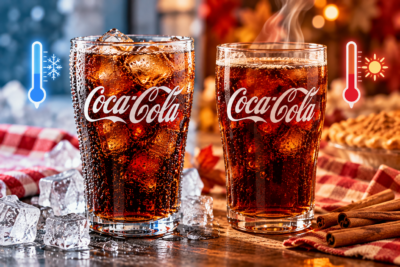
Have you ever noticed that an ice-cold Coca-Cola tastes different from one that’s been sitting on the counter for a while? Or that hot chocolate seems richer and more flavorful when it’s warm? It’s not your imagination. Temperature plays a surprisingly important role in how we experience taste, and there’s some fascinating science behind it.
Taste Receptors
Our tongues contain taste receptors that detect five basic tastes: sweet, salty, sour, bitter, and umami. But those receptors don’t always respond the same way at every temperature. Some become more or less sensitive as foods and beverages warm up or cool down. That’s one reason the exact same drink can seem sweeter, sharper, or more refreshing depending on its temperature.
Sweetness
Sweetness is a particularly interesting example. In many foods and beverages, cooler temperatures can make sweetness seem less intense, while warmer temperatures can make it more noticeable. That’s why a room-temperature soft drink may seem sweeter than the same beverage served ice-cold, even though the sugar content hasn’t changed at all.
Aroma
Temperature also affects aroma, which is a major part of what we call flavor. Warm foods release aromatic compounds more readily, allowing more of those scent molecules to reach your nose. That’s why freshly baked cookies smell so inviting and why a warm apple pie seems to fill the entire kitchen with its delicious fragrance.
Cold temperatures, on the other hand, slow the release of many aromas. This can make flavors seem cleaner or more subdued. But when it comes to carbonated beverages like Coca-Cola, cold temperatures offer another advantage: they help keep carbon dioxide dissolved in the liquid. That means more of those tiny, refreshing bubbles stay right where they belong—in your drink.
Physical Sensation
There’s also the physical sensation of temperature itself. Cold beverages can provide a cooling sensation that we associate with refreshment, especially on a warm afternoon. Meanwhile, hot beverages often bring feelings of comfort and warmth, particularly during the cooler months.
Interestingly, our brains combine all these sensations—taste, smell, temperature, and texture—into one overall flavor experience. So even when the ingredients stay exactly the same, changing the temperature can change how we perceive what we’re eating or drinking.
As November brings cooler weather and holiday gatherings, it’s the perfect time to appreciate how temperature shapes our favorite flavors. Whether you’re enjoying a steaming mug of cocoa, a slice of warm apple pie, or an ice-cold Coca-Cola® with Thanksgiving dinner, there’s a little science making every bite and sip more enjoyable.
Sometimes, the secret to great flavor isn’t changing the recipe at all. It’s simply finding the right temperature.