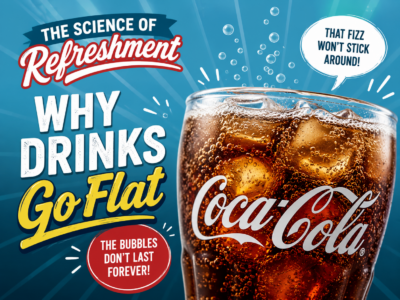
Few things are more refreshing than opening a cold, fizzy soft drink. That satisfying psst as the cap comes off or the tab pops open is the sound of carbonation escaping, and it’s the same tiny bubbles that give your favorite beverage its crisp, lively taste. But leave that Coke sitting on the counter for a while, and before long it starts to taste…flat. So what happened?
Carbon Dioxide
The secret lies in carbon dioxide, or CO₂. During production, soft drinks are infused with CO₂ under pressure. As long as the bottle or can remains sealed, the gas stays dissolved in the liquid. The moment you open it, the pressure inside the container drops, and the carbon dioxide begins to escape.
Those bubbles don’t all disappear at once. Instead, they slowly make their way to the surface and drift into the air. Every sip, swirl, or shake creates more opportunities for the gas to escape. Over time, less CO₂ remains dissolved in the beverage, which means fewer bubbles and a noticeably different taste.
Temperature
Temperature also plays an important role. A cold Coke will hold dissolved gases more effectively than warm ones. That’s one reason a chilled soft drink stays fizzy longer than one left out on a hot summer afternoon. As the beverage warms, carbon dioxide escapes more quickly, speeding up the flattening process.
Container
The size of the container matters, too. A two-liter bottle that’s been opened several times has a large pocket of air inside. Each time the cap is removed, more carbon dioxide escapes and is replaced by ordinary air. Smaller bottles and cans are often finished in one sitting, leaving less time for carbonation to disappear.
Taste
Interestingly, carbonation doesn’t just create bubbles. It also changes how we experience flavor. The tiny bubbles stimulate nerve endings on your tongue and help carry aromas to your nose, making the drink taste brighter and more refreshing. When the carbonation fades, the flavors can seem softer and less vibrant, even though the ingredients themselves haven’t changed.
The good news? You can slow the process. Reseal bottles tightly, keep them refrigerated, and avoid leaving them open longer than necessary. These simple steps help retain more of the carbonation, keeping every pour as crisp as possible.
So the next time you hear that familiar psst when you open an ice-cold Coca-Cola, Sprite, or another favorite beverage, you’ll know you’re hearing science at work—and enjoying one of the little wonders that makes a refreshing drink so satisfying.